Habits
Habits is a habit tracker built into the planner: each habit is a name and a colour, marked on the days you keep it. A day you miss leaves a gap in the run, and nothing counts it against you.
- Add oneKeep a new habit, on the Habits page. Name it, colour it.
- Mark a dayTap the day's circle, on the card or in the week.
- Rest instead of stoppingPause. Rested days draw grey and the week stops asking.
- Start the count againReset. Same habit, begun again from today.
- Let one goTap its cross when next week offers it. Nothing asks why.
What a habit is, and the card it lives on
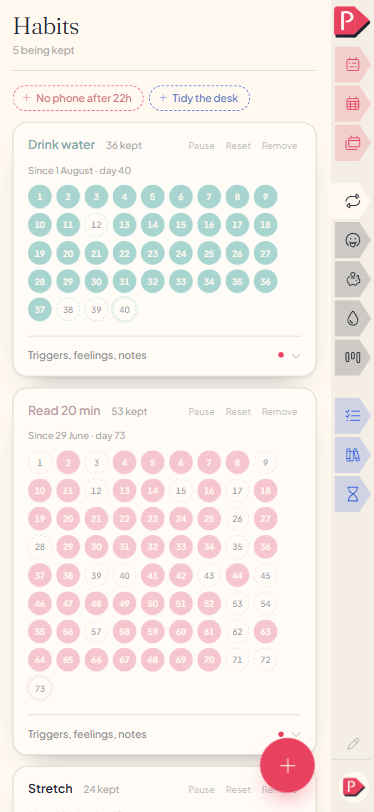
A name, a colour, and the run of days behind it. Each habit has its own card: the circles for this stretch of days, how long it's been going, and room for the few things worth writing down about it.
The tally says how many days you kept, never how many you missed.
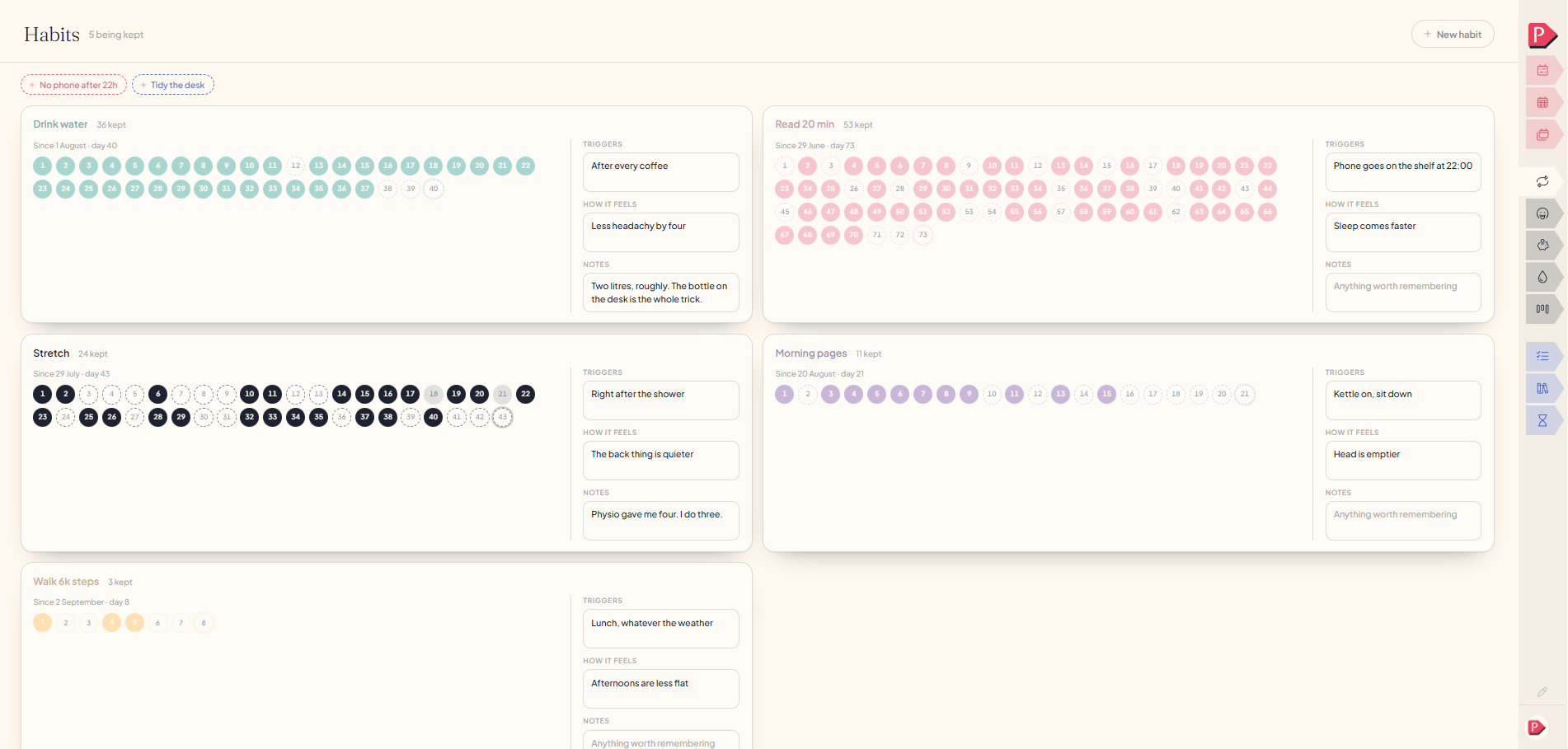
Adding a habit
Keep a new habit, at the foot of the list. Name it, pick a colour, press Start keeping it.
Keep a new habit, behind the + circle at the foot of the screen. Name it, pick a colour, press Start keeping it.
Keeping a new habit from the Habits page
Keeping a new habit from the Habits page, on a phone
You can also start one from the week: type a name into a day's habit rail that doesn't match anything you're already keeping, and it becomes a habit from that day.
Starting a habit from the week's habit rail
Starting a habit from the week's habit rail, on a phone
Marking the days you kept it
Tap a day's circle to fill it, and tap it again to take it back off. The row of circles is the habit's run: days you kept show as colour, days you missed as gaps.
The same circles sit in the week, under the day's categories, counted by the week rather than the day: 4/7 and so on.
Marking yesterday, then today
Marking yesterday, then today, on a phone
Triggers, How it feels, and Notes
Three optional lines, all empty to begin with, for the part of a habit that isn't a row of circles:
- Triggers what sets it off. "After coffee, when the laptop shuts".
- How it feels the honest version. "Slow to start, good afterwards".
- Notes anything else worth remembering.
Pausing a habit
Pause turns the run a soft grey rather than leaving gaps in it, and the whole card rests with it. A rest you declare on purpose is different from a day you missed, and it's drawn differently.
The week stops offering that habit back while a pause is open, and picks up where it left off when you end it.
Carrying a habit into a new week
Every Monday the week offers back what you were keeping, lightly drawn and not written anywhere yet. One tap keeps it going, and leaving it untouched drops it, with nothing asking why.
A habit you pick back up doesn't start its count from the day you tapped it. It continues the run you're actually continuing, so a week you skipped in the middle doesn't erase the weeks before it.
Taking up an offered habit, then marking it kept
Streaks, and why a broken chain isn't a failure
Nothing here counts what you missed: a gap in a run is just a gap, with no red mark and no streak reset to zero. An evening notification, if you turn one on, counts the habits still open today so you can keep them before midnight, and never a run you have already broken.
Questions about habits
The details, for when you want them. Nothing here is required reading.Why is tracking habits worth doing at all?
Because a habit is invisible from inside it. You know roughly whether you've been reading lately; you don't know that you read on eleven days last month and four this one. A row of circles turns a vague sense of how it's going into something you can actually look at.
- It makes the decision smaller. Marking a circle takes a second, and the second is a reminder that the habit exists on a day you'd otherwise not think about it.
- It shows you the pattern. Gaps cluster. Seeing that yours all land on the same two weekdays is worth more than any amount of resolving to try harder.
- It gives credit honestly. Four days out of forty feels like nothing from the inside and reads as four kept days on the page, which is what it actually is.
What it is not for is pressure, which is why nothing here counts a miss.
What's the difference between Reset and Remove?
Reset starts the count again from today, keeping the name, the colour and everything you wrote about it. It's the same habit begun again rather than a different one.
Remove takes the habit off the page altogether.
Do habits count toward the open figure on a day?
No. That figure counts tasks. Habits are counted in their own card, by the week rather than the day, because a habit isn't something you finish today. See Week categories.
Can I mark a day I forgot at the time?
Yes. Any circle in the run takes a tap, whether it's today's or last Tuesday's, and the card says how many earlier days are behind it and how many of those you kept.
Can I change the day a habit started?
Yes, from the date on the card. Useful when you've been keeping something for a month before you got round to writing it down here.
Changing when a habit started
Changing when a habit started, on a phone
How many habits should I keep at once?
Five at a time on the free plan, unlimited with Planye+, and fewer than you'd think either way. A page of twelve rows of circles reads as a checklist, and a checklist is the thing this page is trying not to be.
two you keep beat nine you don't